An aid organization has the funding and a list of families to support. A conference has approved living allowances for participants arriving from around the world. A business has collected payment from a customer and needs to pay suppliers in another country.
The money is available. Getting it to the right people, in a form they can use, is the next challenge.
Finance teams have to work across currencies, banking systems and recipient requirements while keeping approvals and records in order. A bank transfer may work for one recipient; another may need cash or a way to spend without opening a local bank account.
Stablecoin disbursements can connect those different needs through a common funding and settlement system. Our work in Venezuela, Brazil and Wyoming shows how that becomes useful in practice.
How stablecoin disbursements work
A stablecoin such as USDC is a digital asset designed to track the US dollar. An organization can fund payments through an approved bank transfer or with USDC, then use blockchain settlement to move value to recipients or payout partners. Local partners convert and deliver funds through supported banking, cash or card services.
Bulk payments let a team prepare and manage a group of recipients together. Each payment still needs the correct recipient information, an eligible delivery route and a record of its outcome.
The recipient experience depends on the programme. Funds might arrive directly in a local bank account, or recipients might receive a digital balance and choose how to access it. Blockchain settlement can be fast; bank processing, verification and local liquidity still affect the time to usable money.
Getting emergency assistance to families in Venezuela
Following the earthquakes in Venezuela, GiveDirectly needed to reach thousands of affected families quickly. Decaf and Airtm connected USDC-funded bulk disbursements to Venezuelan bank accounts.
The integration was built in four days. Payments reached families in under ten minutes, and 3,700 families received assistance.
Recipients could use local money for the needs they considered most urgent, whether food, medicine, transport or repairs. They did not need to learn how to trade digital assets to receive that bank payment.
That result depended on years of infrastructure coming together: GiveDirectly’s programme delivery, Decaf’s disbursement tools and Airtm’s local payment network. For humanitarian cash assistance, a working local payout route is essential to the value of stablecoin settlement.

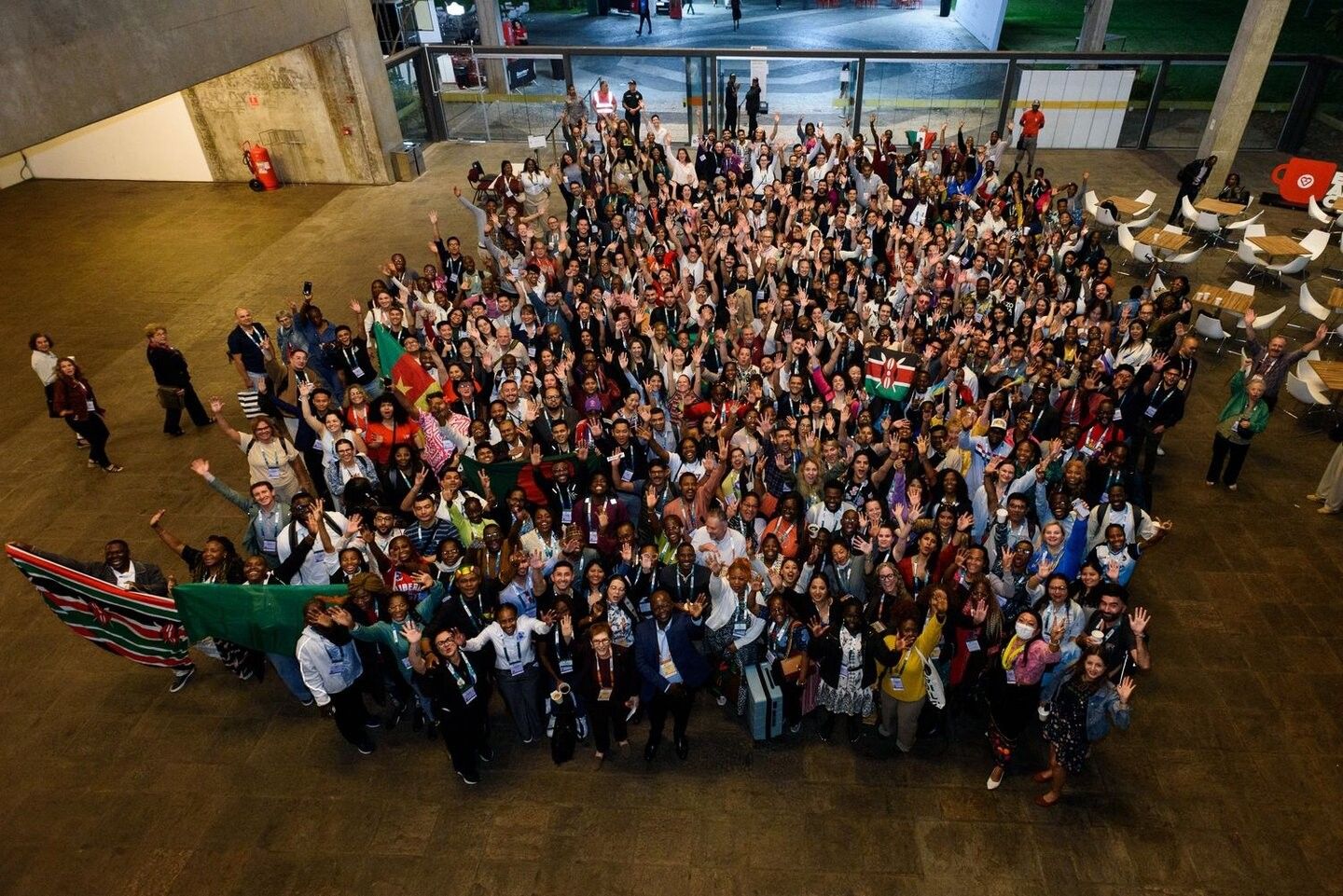
Paying participants from 95 countries at AIDS 2026
The International AIDS Society faced a different problem in Rio de Janeiro. Around 900 scholarship recipients, volunteers and programme beneficiaries needed payments, with recipients from 95 countries.
A single payment method could not suit everyone. People arrived with different documents, banking access and experience using digital wallets. They also needed flexibility to use their funds during the conference and after returning home.
IAS funded the programme in dollars through OwlPay Harbor. Funds moved as USDC over Stellar into Decaf wallets. Recipients could choose among available methods, including PIX in Brazil, MoneyGram cash pickup, a virtual card and bank transfers. The emergency cash IAS brought as a backup was never distributed.
The project also reinforced how much onboarding and support matter. A digital balance is useful when someone understands how to access it and has an alternative if their preferred method is unavailable. For international scholarship and per diem payments, recipient choice is part of reliable delivery.
Connecting an onchain treasury to food assistance in Wyoming
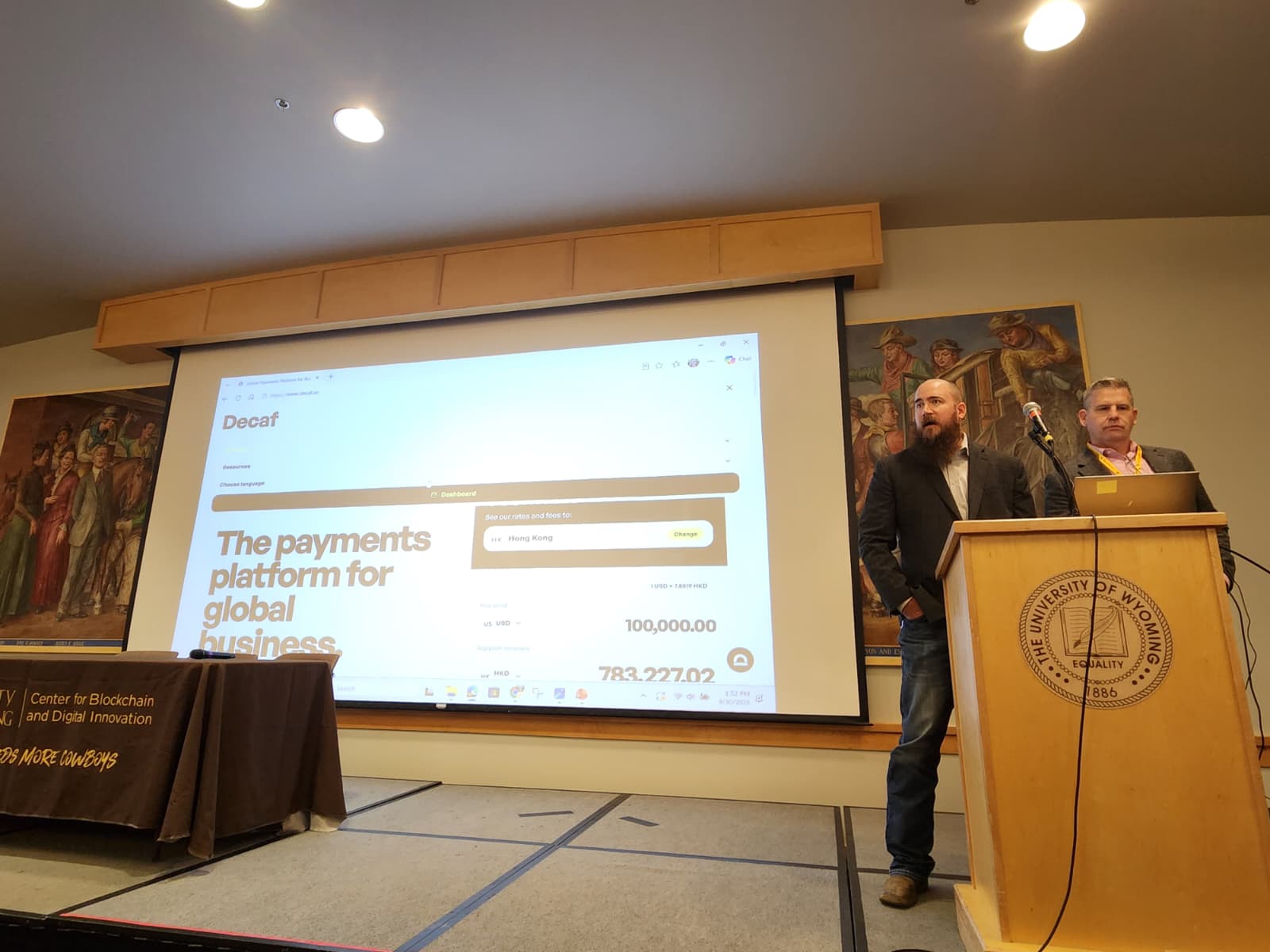
At the September 30, 2026 Wyoming Blockchain Stampede, Tyler Gentry of NEED-AID and Laramie Interfaith demonstrated a model connecting a stablecoin treasury to US bank payouts through Decaf Business, supporting local food assistance.
The demonstration brought together non-custodial fund holding, multi-user permissions and payment reporting. OwlTing provided the underlying US payment infrastructure.
For a donation-funded organization or DAO, this connects treasury management to practical spending. Funds can be held onchain under the organization’s control, then converted for a payment to a local partner’s bank account.
Donors can inspect public onchain balances and transfers. Payout records and programme reporting provide the additional evidence needed to explain delivery and how assistance was used. Blockchain visibility supports that work; it does not reveal every subsequent bank transaction or purchase.
Running the payment programme from funding to reporting
These projects have shaped Decaf Business around the work a finance team needs to do: receive or fund a balance, control access, prepare individual or bulk payments, and track their progress.
Eligible companies and organizations incorporated outside the United States can access named US dollar accounts through Decaf’s integration with OwlPay Harbor, subject to business verification and jurisdiction requirements. Approved funding can then support a USDC balance and available payouts. Supported US methods include ACH, RTP and wire transfers, with Visa Direct serving eligible US debit cards according to account availability.
For recipients whose bank details are not available upfront, Decaf’s last-mile payments can start with a WhatsApp number or email. A secure link lets recipients claim in their browser and choose an eligible bank, cash or card option. WhatsApp and email carry the notification and link; the payment moves through the underlying financial infrastructure.
The onboarding approach brings company information and privately verified identity evidence into a centrally reviewed KYB record. Approved information is submitted to the relevant banking partner, which makes its own onboarding decision and may request additional information.
Organizations using other wallets also have more flexibility: Decaf now supports USDC transfers from Stellar to Base through Circle’s Cross-Chain Transfer Protocol. That can help when a receiving platform uses a different blockchain.
Where this approach fits
Stablecoin bulk payments are particularly useful to evaluate when recipients span several countries, have different levels of banking access, or need a choice of local payout methods. The same considerations apply to businesses collecting funds in one market and making supplier payments elsewhere.
Start with the actual payment list. Check recipient countries and eligibility, available methods, total fees and foreign exchange costs, and expected delivery times. Decide who can prepare and approve payments, and what finance needs to reconcile them. Test the intended routes with a small group before expanding the programme.
Venezuela required rapid bank delivery. IAS needed flexibility for a global population. Wyoming brought treasury visibility into local aid. Across all three, the useful measure is whether the intended recipient can access and use the funds.
Common questions about global disbursements
Do recipients need a bank account?
Not for every route. Eligible recipients may use cash pickup or card options. Availability and verification requirements depend on the country and provider.
Do recipients need to understand crypto?
A direct bank payout can arrive as local money. Where recipients use a wallet or claim link, they need clear instructions for that flow, without needing to understand blockchain settlement.
Can an organization fund payments from a bank account?
Yes, through supported and approved funding routes. Third-party customer payments and donations depend on the account’s permissions and provider requirements.
What can the finance team track?
Payment status and transaction records support reconciliation. Onchain transfers can be checked on the public blockchain; fiat delivery and programme outcomes require the corresponding payout and organizational records.
Explore Decaf Business to discuss the countries, recipients and payment workflow your organization needs to support.
Source links
Published Decaf case-study article