The technology, payment operations, and partnerships behind delivering emergency cash to 3,765 people, with 86% of donated funds reaching recipients.
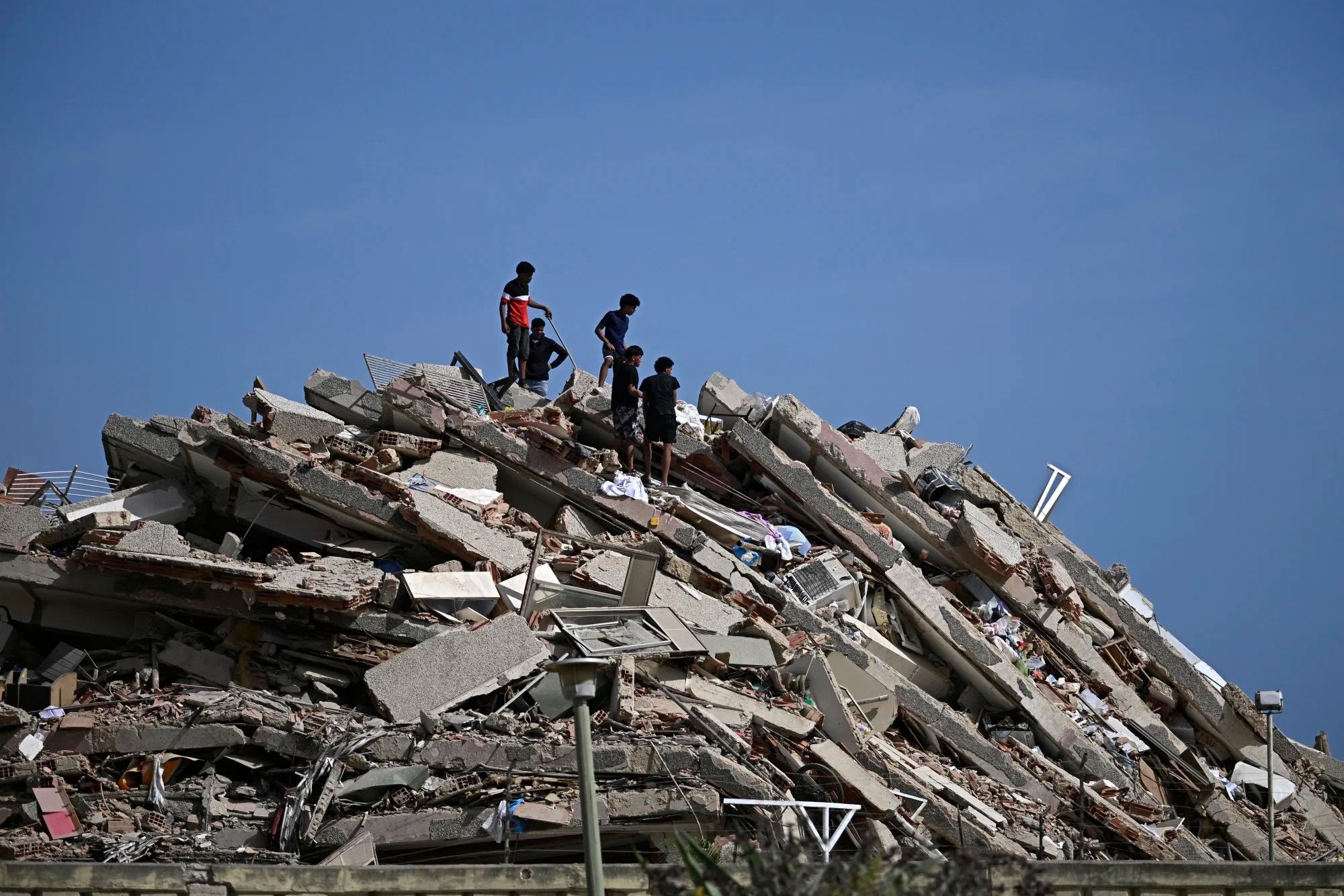
When two powerful earthquakes struck Venezuela in June 2026, thousands of families were left facing damaged homes, lost income, and an urgent need for assistance. GiveDirectly, an international nonprofit specializing in direct cash transfers, moved quickly to organize an emergency response. But getting money into Venezuela was anything but straightforward.
International banking options were limited, sanctions created significant regulatory considerations, and the availability of physical cash was constrained. GiveDirectly needed a way to move funds into the country and deliver assistance through a payment method recipients could already access.
Working alongside GiveDirectly and Airtm, Decaf helped develop and operate a payment solution connecting international USDC funding to local bank transfers through Pago Móvil, Venezuela's widely used mobile payment system. The response ultimately reached 3,765 people, each receiving $340 directly into their existing bank accounts.
One of the most notable outcomes was the program's efficiency. According to GiveDirectly, 86% of donated funds reached recipients as cash, exceeding its original expectation of 70–80%. It was an encouraging result for a program operating in such a challenging environment, and one that raises broader questions about how humanitarian organizations can make better use of modern payment infrastructure.
Building a payment route from scratch
GiveDirectly had not previously operated in Venezuela and did not have an established payment route into the country. Conventional options presented a combination of regulatory, logistical, and operational challenges. Physical cash distribution would have been difficult to organize safely at scale, while asking recipients to use cryptocurrency wallets would have added unnecessary complexity.
Pago Móvil offered a more practical alternative because recipients could receive bolívares directly in their existing Venezuelan bank accounts. The difficulty was finding a way to fund those payments internationally without requiring GiveDirectly to maintain local banking relationships or take on arrangements that did not meet its compliance requirements.
Decaf worked with GiveDirectly to establish a funding approach using its existing Coinbase Business account, USDC, and a non-custodial institutional wallet. This meant GiveDirectly could retain control of its digital assets while using Decaf's infrastructure to manage and prepare payments. Decaf also provided recipient compliance screening, institutional permissions, security controls, and transaction reporting.
The architecture was particularly relevant given the regulatory environment. Decaf helped GiveDirectly evaluate how funds could move from its existing accounts into an appropriate payment structure, with non-custodial control forming an important part of the design. That structure operated alongside the necessary compliance checks and due diligence rather than replacing them.
There was also considerable engineering work involved. Decaf's team moved quickly to adapt the platform for the operation, with an initial four-day development effort addressing the required integrations and workflows. This included developing customized payment functionality, cross-chain USDC capabilities involving CCTP, recipient communications, and the operational tools needed to support bulk disbursements.
The ability to customize infrastructure quickly was particularly valuable in an emergency. Rather than expecting GiveDirectly to change its processes to fit a standard payment product, Decaf could adapt the technology to the organization's requirements.
From USDC to local currency
Once GiveDirectly had funded its wallet, the next challenge was converting those funds into payments recipients could use.
Decaf provided the institutional wallet and payment management infrastructure, while Airtm connected the USDC funding to local currency liquidity through its marketplace. Vetted participants in Airtm's network supplied bolívares and completed domestic transfers through Pago Móvil.
The arrangement allowed GiveDirectly to fund payments internationally without needing to hold bolívares or transfer money directly through Venezuelan banking institutions. Recipients, meanwhile, received ordinary local bank transfers. They did not need to install Decaf, create a crypto wallet, or understand anything about stablecoins.
This separation between the international funding mechanism and the recipient's payment experience was central to making the solution practical. It also meant the underlying infrastructure could be adapted and managed without making the process more complicated for the people receiving assistance.
One important operational constraint was local currency liquidity. While USDC transfers could be completed quickly, the final payouts depended on the amount of bolívares available through Airtm's network and the banking limits faced by local participants.
Decaf helped coordinate the disbursement schedule around those constraints, managing the timing of payment batches rather than attempting to send thousands of transfers simultaneously. Working with the available liquidity helped the partners execute the payments more reliably.
Across 14 payment batches, GiveDirectly reported a median arrival time of two minutes after a batch was initiated, with a final failure rate below 0.5%. Some payments took longer when liquidity was limited, illustrating why managing the final stages of payment delivery matters just as much as the speed of the underlying blockchain transactions.
Supporting recipients through WhatsApp
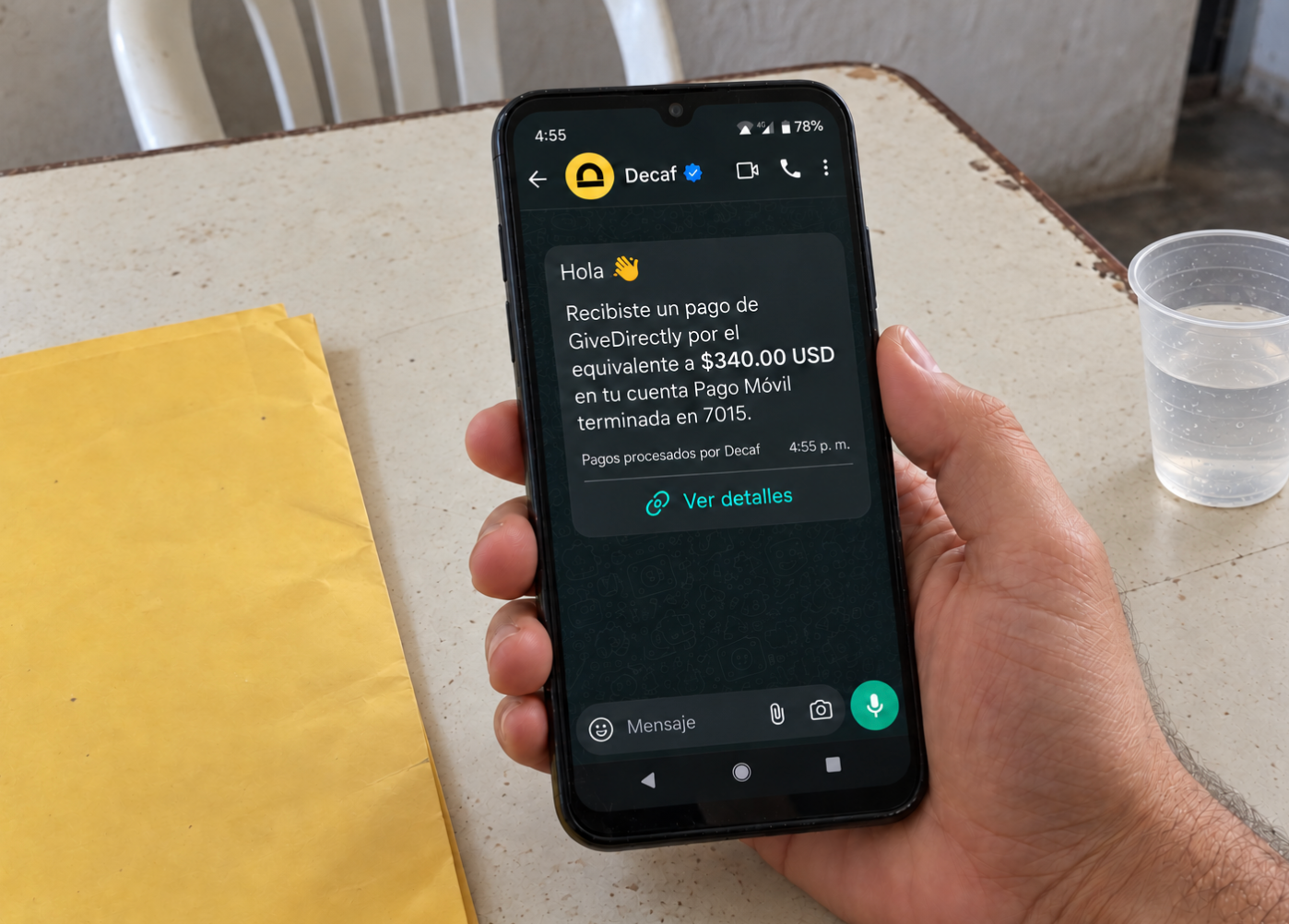
The payment operation also required a way to keep recipients informed and help resolve problems. Decaf implemented WhatsApp notifications and used its existing support infrastructure to assist recipients with payment-related questions.
This was especially useful in a humanitarian response, where recipients might be unfamiliar with the organization sending assistance or concerned about the legitimacy of unexpected payment notifications. Providing accessible communication helped make the experience more understandable and reassuring.
One of the most memorable parts of the project was the feedback received through Decaf's support channels. Many messages were not complaints or technical questions, but expressions of gratitude from people who had received their assistance. Some of the feedback GiveDirectly subsequently included in its public reporting came from conversations handled by Decaf's support team.
Those conversations were an important reminder that the success of the project was not ultimately measured by stablecoin transactions or integration speed. It was measured by whether people received money they could use, at a time when they needed it.
GiveDirectly's follow-up research found that recipients used their payments for essentials such as food, water, healthcare, and replacing damaged belongings. Ninety-five percent reported improved stability and wellbeing, while 60% said the assistance helped them restart or maintain income-generating activities. For people affected by the earthquakes, access to immediate financial support gave them some flexibility to decide what their families needed most.
The results and the importance of delivery efficiency
The response reached 3,765 people, with approximately $1.28 million distributed directly as cash assistance. First payments began 21 days after the earthquakes, and 97% of surveyed recipients reported receiving assistance at the right time.
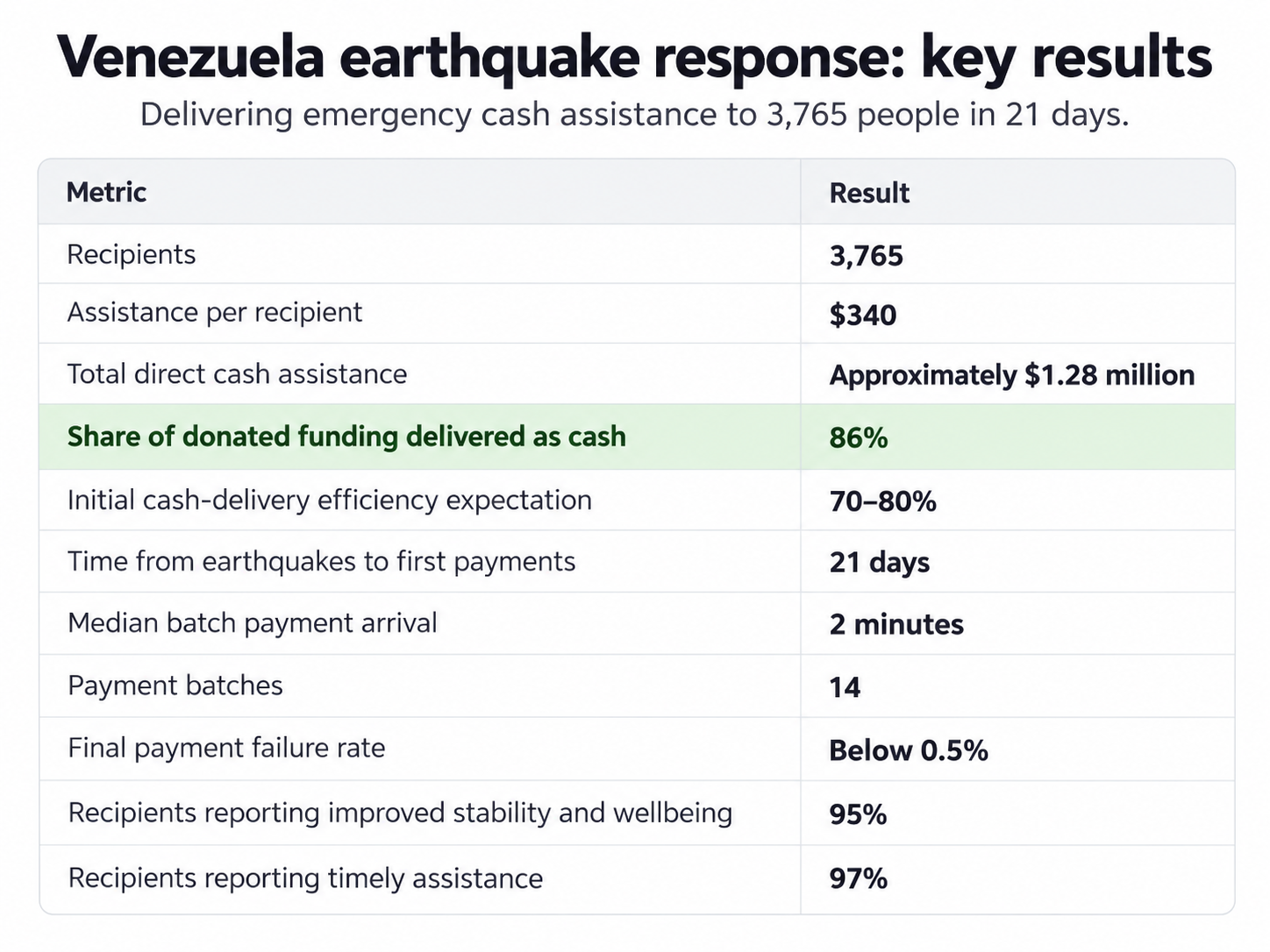
The full results also reveal something important about the economics of humanitarian assistance. GiveDirectly reported that 86 cents of every donated dollar reached recipients as cash, above its original expectation of 70–80 cents.
This is a measure of overall program efficiency, rather than simply the cost of payment processing. GiveDirectly attributed the result in part to its largely remote operating model, which reduced field delivery expenses, and to reaching more recipients than initially anticipated, which spread fixed costs across a larger group.
The digital payment infrastructure also provided advantages. GiveDirectly could fund its Decaf wallet with USDC in minutes, without fees at that funding stage. Payments could then be managed centrally and delivered through local accounts without distributing physical cash or issuing new financial instruments to recipients. Decaf's ability to adapt workflows, coordinate disbursements, and provide recipient support helped make this digital-first approach operationally feasible.
The combined result is worth examining because payment delivery is an important, and sometimes overlooked, part of humanitarian program design. The choice of payment method affects far more than transaction fees. It can influence administration, recipient enrollment, reconciliation, support, cash-out costs, and the amount of assistance ultimately available to beneficiaries.
How does 86% compare with other humanitarian programs?
A 2026 study from the CALP Network, Show Me the Money: Efficiency and Effectiveness in Humanitarian Response, examined cost efficiency across humanitarian assistance programs using data from 63 organizations and funding entities.
The research found that, across its dataset, the unweighted average share of program funding transferred to recipients was approximately 65% for multipurpose cash assistance, 66% for sectoral cash, and 63% for voucher programs. In-kind food assistance averaged approximately 55–57%.
Larger programs generally achieved better results. When weighted by program funding, the averages increased to approximately 77% for multipurpose cash, 71% for sectoral cash, and 74% for vouchers. This reflects the economies of scale that can be achieved when organizations spread operational costs across larger assistance programs.
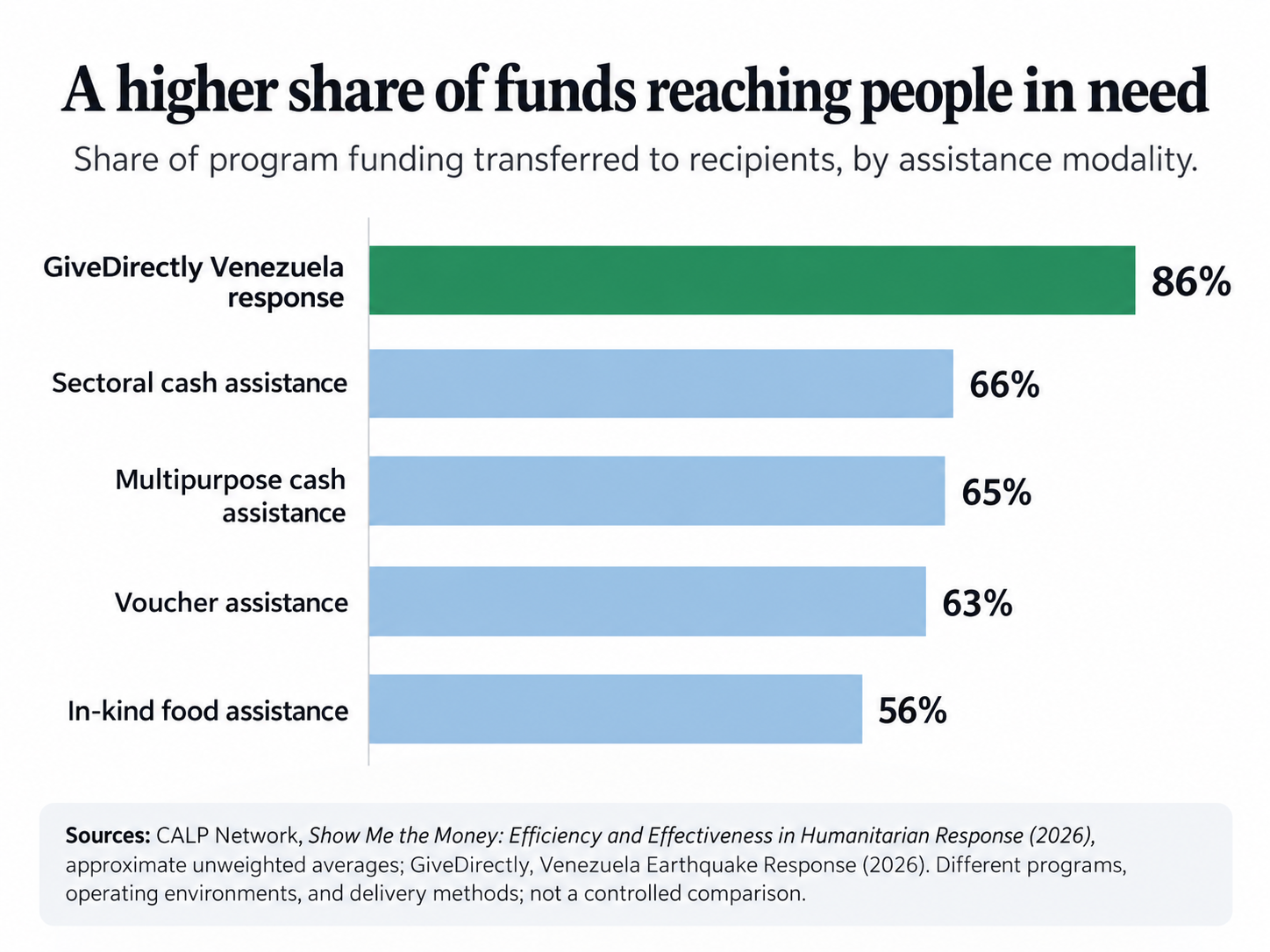
GiveDirectly's 86% result compares favorably with these figures, although the programs were conducted in different environments and the comparison is not a controlled assessment of payment methods. It would also be misleading to attribute the difference entirely to stablecoins or Decaf. Program design, local operating conditions, scale, and many other factors influence the final result.
Nevertheless, the findings illustrate why improving delivery efficiency deserves serious attention from humanitarian organizations.
For example, on a hypothetical $10 million assistance budget, increasing the amount reaching recipients from 75% to 86% would represent an additional $1.1 million in direct assistance, assuming comparable accounting and program requirements. Even relatively small improvements can make a substantial difference when applied across large programs.
Traditional payment approaches can involve costs associated with prepaid card issuance, cash distribution, intermediaries, foreign exchange, withdrawal fees, reconciliation, and manual administration. These vary significantly between programs, and cards or physical cash may still be the most appropriate options in certain environments.
The opportunity with stablecoin-enabled infrastructure is not that it automatically eliminates these expenses. Rather, it gives organizations another way to design their payment operations, potentially reducing some costs while improving speed, flexibility, and oversight.
In Venezuela, the use of digital funding and local payment networks helped support a program that delivered a high proportion of its available resources directly to recipients. For organizations reviewing their own payment models, that is a result worth studying.
Sources: GiveDirectly's Venezuela earthquake response and the CALP Network's Show Me the Money study.
Security, transparency, and institutional accountability
Another important consideration for humanitarian organizations is ensuring that funds reach the intended recipients. Programs can face risks involving incorrect payment details, duplicate enrollments, unauthorized transactions, or the diversion of assistance.
Blockchain infrastructure can provide useful transaction visibility, but it does not eliminate these risks on its own. Effective disbursement programs still require identity verification, compliance screening, authorization controls, monitoring, and reliable ways to resolve exceptions.
GiveDirectly managed recipient enrollment and verification, while Decaf provided compliance screening of payment information and the institutional wallet infrastructure used to manage disbursements. Decaf's non-custodial architecture, organizational permissions, and reporting capabilities supported the level of oversight expected when managing funds on behalf of an international organization.
These controls are relevant beyond humanitarian assistance. Businesses paying international suppliers, organizations distributing grants, and companies managing contractor payments face many of the same requirements. They need modern payment capabilities, but they also need security, reporting, and clear accountability.
What this means for the future of international payments
The Venezuela response showed how a combination of modern payment infrastructure, local payout networks, and adaptable engineering can help solve a problem that conventional payment routes struggled to address.
It also demonstrated that the most important work often happens outside the actual transfer of funds. Establishing a suitable compliance architecture, integrating payment providers, managing liquidity, supporting recipients, and reconciling transactions were all necessary to make the operation work reliably.
For Decaf, one of the main lessons was the value of being able to respond quickly to an organization's specific requirements. The platform provided the institutional foundation, but the team's ability to build, customize, and coordinate the solution was equally important.
For humanitarian organizations, the broader lesson is that payment infrastructure should be evaluated not only on geographic coverage or transaction speed, but also on the full cost of delivery, operational flexibility, security, and recipient experience. A payment method that works well in one country or program may not be suitable for another, and organizations benefit from having access to different rails and delivery options.
The work in Venezuela offers a practical example of what can be achieved when those capabilities come together. GiveDirectly led the humanitarian response, working with local partners to identify and support people affected by the earthquakes. Decaf and Airtm helped establish the payment infrastructure that allowed funds to reach recipients through a familiar domestic payment system.
The result was a complex international payment operation made relatively simple for thousands of people, with a high proportion of the program's funding reaching them directly.
As humanitarian organizations look for ways to respond faster, expand coverage, and make better use of limited funding, the infrastructure used to deliver assistance deserves as much attention as the funding itself.
At Decaf, we're applying these lessons to the broader challenge of global disbursements, helping organizations manage cross-border payments with the flexibility, security, and operational support their work requires.
Learn more about Decaf Business
Read GiveDirectly's full account for more on the earthquake response, recipient outcomes, and lessons from the program.